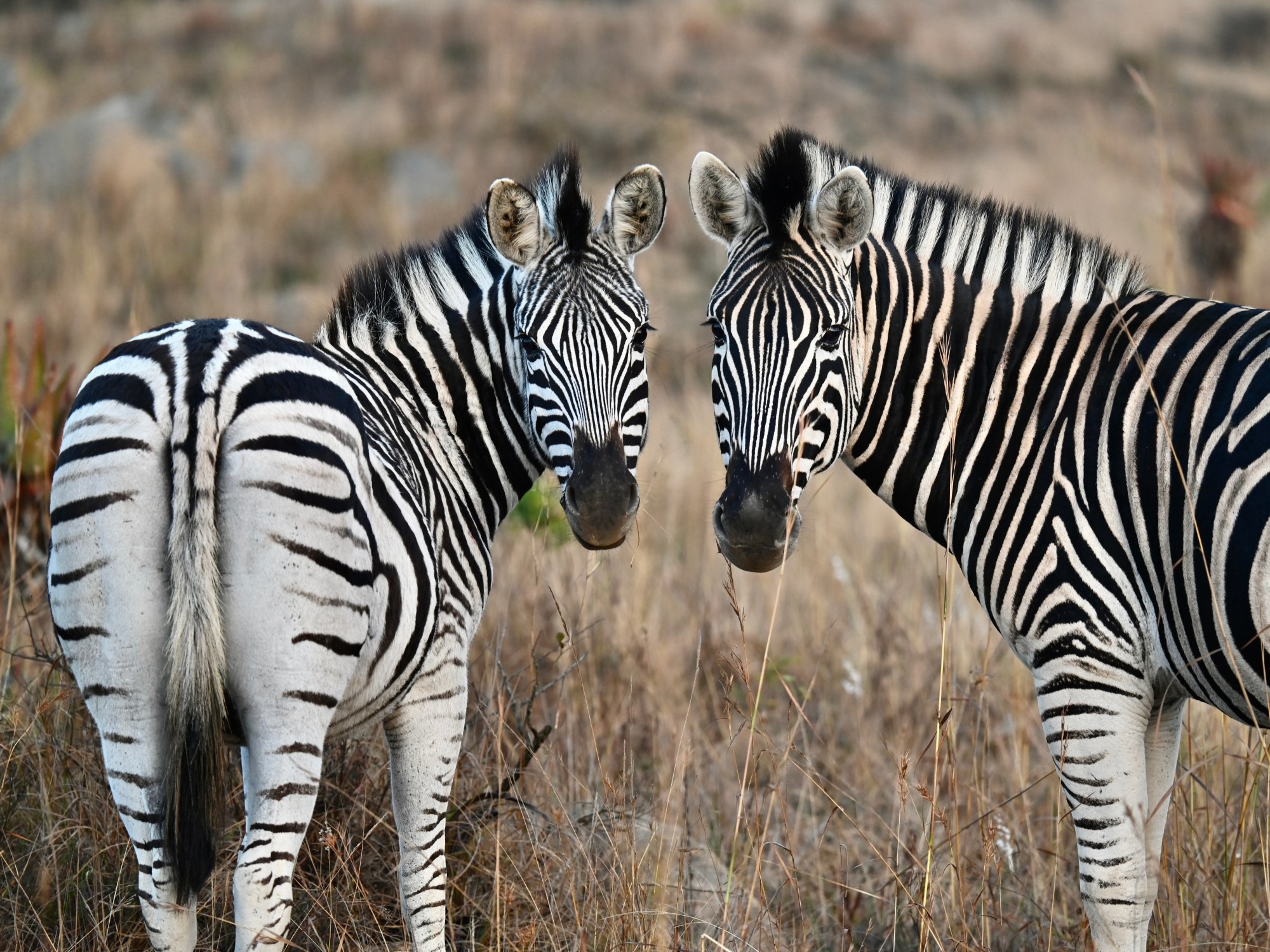
Daybreak filters through the fever trees and umbrella thorns of South Africa’s White Umfolozi River Valley, splintering orange light across a puckered grassland teeming with newly arrived wildlife. Bumping atop rough roads in an open-sided safari vehicle is field guide Eduan Balt, who’s “reading the bush newspaper” – studying fresh prints on dirt trails for signs of apex predators.
Balt drives along some of the valley’s 600km of roads – many built in recent years – passing bomas (enclosures) holding quarantined buffalo and a pond where hippos with giant jowls yawn into the morning air. The smell of wild anise wafts over the vehicle as it careens toward the valley floor. Then, suddenly, a lioness darts across the golden grassland to our left, muscling her way to a fallen tree where three kitten-like cubs bound into view.
These are the first lions born in this part of KwaZulu-Natal province in at least 150 years. Lions, like most native animals, became locally extinct in the decades following the Anglo-Zulu War of 1879, after which the British Empire gained control of the region, turning it into farmland. Zulu communities got large swathes of it back during the land reforms that followed the fall of apartheid. But after decades of cattle grazing and illicit hunting, the area was largely depleted of wildlife.
That changed starting in 2018, thanks to an innovative collaboration between philanthropic investors, local NGOs and three Zulu community trusts, who leased lands to create one of the most ambitious rewilding projects in South Africa in more than a decade… (continue reading at the BBC)
 Mark Johanson - Travel Writer | Freelance Journalist