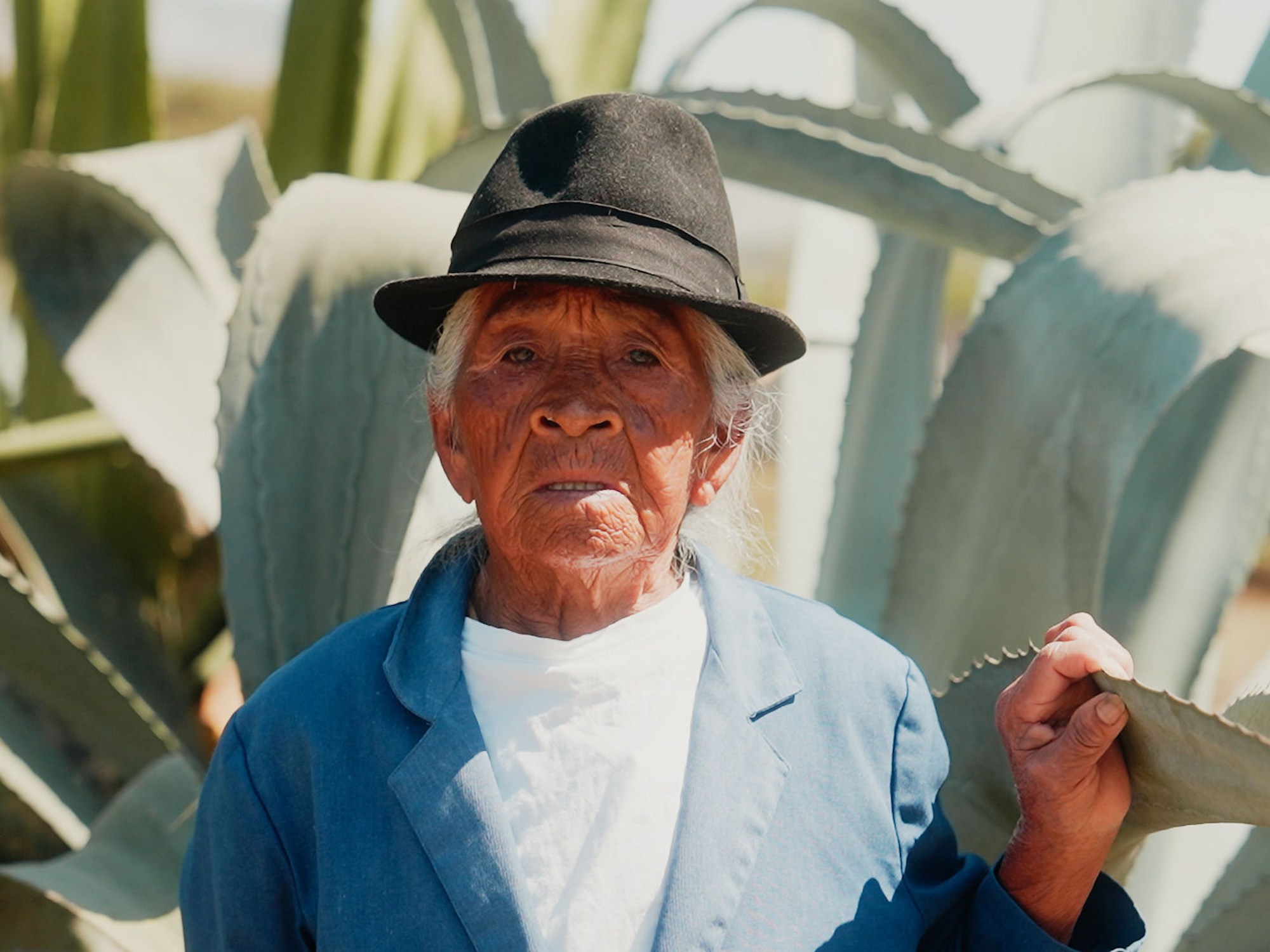
Elizabeth Guagrilla recalls the sunny days of her childhood in the Ecuadorian highlands, drinking the sweet nectar of the blue agave plant on visits to her great-grandmother’s house. Back then, she wasn’t a fan of its earthy taste. Now, she’s made it her life’s work to bring agave to a global audience, carrying on a tradition that was dying out with the older generations.
Guagrilla is the head distiller of Chawar, a company that produces an emerging agave spirit called miske, a distilled version of the agave sap that became commercially available only in the last decade. Behind Chawar’s production is Ecuador’s first all-women’s agave harvesting co-op, Mishkita, which has 12 members between the ages of 25 and 60 who all cultivate plants in the highlands about an hour northeast of Quito. “It’s an association where we can share experiences, and grow as women,” Guagrilla says.
Indigenous women in Ecuador have harvested agave plants for millennia, using these spiky succulents for everything from shampoos and laundry soaps to medicines, textiles, and traditional crafts. The agave’s sap, known as chawarmishki, was an early sweetener in the Ecuadorian highlands before Spanish conquistadors introduced sugar cane. Women have harvested chawarmishki as a juice for centuries, and may have spontaneously fermented it into a kind of alcoholic chicha called guarango (similar to Mexican pulque) for nearly as long… (continue reading at Atlas Obscura)
 Mark Johanson - Travel Writer | Freelance Journalist